
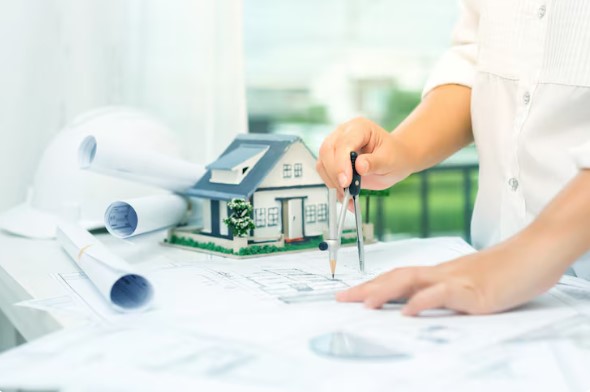
The construction industry is a recurring challenge, especially regarding balancing the friction between architectural designs and structural necessity. Architects often push the boundaries of what a space can examine like this, while engineers have to ensure that those spaces remain safe under the laws of physics. However, at BS Structural Innovation Company, we don’t perceive it as a conflict but as a collaborative discipline. Accordingly, we implement the discipline to deliver results that are both visually impressive and fundamentally stable.
Filling the Gap Between Concept and Reality
The Gap Between concept and reality is one of the most common hurdles in high-end plans, the “afterthought” approach to engineering. Often, an engineer is provided with a final form and aesthetic design and told to implement it. This usually results in heavy, intrusive supports that waste the original architectural intent. Soumyendu Ganguly has used years of experience in cleansing, a process where the engineering team works with a creative partner from the initial drafting stage.
By using advanced Finite Element Analysis (FEA) and Building Information Modelling (BIM), we can predict how complex designs, like cantilevered balconies or glass curtain walls, will behave under various load conditions. This data-driven approach allows us to position power where it is needed, often hidden in the structural skeleton inside the design itself, to maintain pristine, unobstructed lines.
Solving the “Column Problem” in Modern Layouts
One big trend in Indian architecture is the demand for large, open spaces, from homes to warehouses. Clients want to remove internal columns. Specialised engineering solutions make this possible.
- Post-Tensioning: This technique makes space for thinner floor slabs and longer spans between columns, providing architects with more vertical and horizontal space.
- Transfer Girders: used to transport the load from one structural system to another, to allow open lobbies beneath heavy residential floors.
- Composite Structures: Combining the compressive strength of concrete with the tensile strength of steel to reduce member sizes without sacrificing safety.
At BS Structural Innovation Company, we focus on these technical optimisations to ensure that the “art” of the building is not hindered by the “science”.
Engineering for the Local Context
For engineering the local context in regions such as West Bengal, this makes balance even more important for specific soil types and seismic zones. It is a beautiful building, a failure if it cannot compete with the environmental pressures of its location. Under the guidance of Soumyendu Ganguly, our projects prioritise seismic resilience and soil-structure interaction. We design foundations that are specially formulated for the local alluvial soil to be sure that the architectural finishes, like expensive marble or large-format glass, do not crack because of minor settlement or vibration.
Conclusion
Ultimately, balanced integration of architecture and engineering is our main goal. This balance between architectural designs and structural integrity results in more efficient, faster, and cost optimised construction. We here at BS Structural Innovation Company emphasises both on the original design and structural integrity because we believe homes are not only to stay but it is a legacy for future generations to witness.
By processing structural reality, Seam is a framework. Instead of creativity being a limitation, we turn around complex visions. Permanent, safe, and beautiful in reality.